
Into Multiplicities: An Interview with Chelsea Dingman About I, Divided
Sneha Subramanian Kanta: It is delightful to converse with you, Chelsea. The epigraph in I, Divided is dedicated to Jay Hopler and teachers everywhere. The role of a teacher is essential for society, being formative through the years. Do you want to share how Jay impacted your life and creative work?
Chelsea Dingman: In Jay’s last email to me, he stated that if we are lucky (as teachers), we get to encounter students for whom our only job is get out of their way. He had told me this many times—his job was to get out of the way of what I was writing—which was a gift because I could take risks and experience those necessary failures that lead somewhere great. This didn’t mean that he never gave me feedback. He gave me extensive feedback. But he meant that he needed to get out of the way of my intuitions and obsessions and the forms that they took. He was also more brilliant than I can describe here. I don’t think I will ever be able to give him the credit he deserves for how much I grew as a writer and teacher while working with him. In my last semester with him, I made up my mind that I would ask every question that I hadn’t known to ask before our time together ran out. It seemed unimaginable to me then that I would never have this proximity to him (or the same kind of writing community) again. I kept asking questions just in case. I’m sure I was a bit of a pain, but I regret nothing. I learned more in those three years than I have at any other time in my life. I also learned what kind of teacher and human I want to be, not only during my MFA years, but after when he was sick and still gave me his time and attention anytime I needed it. Simone Weil claims that “attention is the rarest and purest form of generosity.” In giving as much of my attention as I can, I hope that my students learn as much from me as I do from them. I still miss his exclamation marks running roughshod over every line of an email or assignment, the sentences almost bursting off the page. His voice is so clear whenever I read anything he’s written (that dazzling syntax! that punctuation use! all those gorgeous sounds!). I am learning from him still.
Sneha: Ecology is a vital aspect of your poems— the way you weave ecosystems with the most intimate parts of living. In your poem “How to Live in Holy Matrimony”, the concluding lines “In some iterations, we don’t know each other. / The rivers are lonely. / A life is all that’s holy.” converse with the next poem “Fractals”. I return to the lines “Water blurs the windows again, wind tearing / apart our throats. I run my fingers over // the hurricane.”. How do you effectively work with contrasts in your work, when writing about the kind of violence which is specific and personal?
Chelsea: In constructing a speaker’s outer landscape, I think I am always trying to employ images and sounds that also describe the inner landscape of the speaker. I often see these landscapes as mirrors that are held up to each other. In those mirrors, each are also blurred. They are almost the same but not quite. And yet, they are as inseparable as the image in a mirror is from the mirror itself as long as it exists there. The tension between landscapes is thus always taut. And I write about place primarily because place informs the life of the speaker to such an extent that they are often inseparable, and this inseparability contains its own intimacies.
Sneha: There is a fractured dichotomy encapsulated in the title of your collection. The poems are a refusal of conformity and interrogation within the narrative of social structures. In “At the Brain Injury Research Institute”, you utilize a hermit crab adjacent form of question and answer. In another poem, “Litany of When”, there is a concurrent continuum. As a reader, you are inventing ways for me to trace language into multitudes. Every sentence holds torrential rain. What was the process for you for writing these poems?
Chelsea: I think the speaker in my poems, the I, is always a multitude of I’s. It is always a construct, mediated by me. It participates in the refusal of linear narrative, particularly with the use of litany or repetition in which there is no escape from these refusals. In repetition, there is no narrative that is allowed to move forward. There is no event which will be overcome. There is only a stuckness. Instead, within the fractured lines of a poem, I am asking that the speaker shatter and still appear whole across these lines that break and break to demonstrate past or present dividedness. In these fractures, I am refusing narrative, and in writing poems at all, I am refusing to allow myself to be written because the I is a persona that I get to create or decreate. In a poem in the form of an interview where the subject never answers the questions that are asked except aslant, it is another refusal of this performative subjectivity, and yet it is a performance all the same. It feels similar to academic writing in some ways: my voice is also performing that of the scholar or researcher in academic writing. The voice, a thrown voice even there.
Sneha: In “Suicidology”, there are seven disparate parts. The poem moves from brief lines, to fragments, to lengthier lines, and repetition. For those working on a collection of poems about marriage, capitalism, systemic issues, and even the spiritual— what advice do you have with reference to experimentation with form and lineation?
Chelsea: I think the tonal shifts in my collections often come from form. I usually decide the form of a poem based on what the content is, so I must write the poem first. The seven parts of that poem reflect the seven stages of grief, though they occur out of order. For me, the relationship between form and content is inseparable. In a poem, I am structuring to de-structure, as Kristeva might say. I am imposing my own structure on the language that it might not look familiar. The long lines careen at breakneck speed only for the short lines to slow the poem to almost-stasis, while the repetition pushes the narrative back on itself—these elements are reflective of the speaker’s inner landscape through these stages of grief where chaos is another refusal of linear progression, of any movement past grief. Sometimes, the sections feel like holding cells for all that can’t be moved or moved past. Cruelty or love. Death or life.
Sneha: The book is divided into three sections, and the second, “I over what was” is one to which I often return. I want to discuss two poems in this section. Let’s begin with “From Nashville, I Revisit the Days I Lived in Vancouver”. There is chronology, the awareness of being in a particular place, and grief. The lines “In downtown Nashville / tonight, I drink to forget how foreign // I sound. My vowels, winter full.” embody a lack of a sense of belonging to a place. In what ways does recording place and rootedness (or the lack of it, thereof) influence your work?
Chelsea: In “Pyschogeography,” the speaker states, “I’ve been trying to go home my whole life—”. That line still rings true for me. I’ve been essaying within my dissertation, and I came to the realization recently that I write from a place of unbelonging not simply due to the number of times I’ve moved countries or cities in my life (where I locate myself), but because my father died when I was young, and my relationship with my mother was very affected by that. I was displaced by that event and its aftermath from a place of belonging. As a result, I think home is an inaccessible idea that I am a great distance from. And yet, it is an absence that insists on me. It is those distances or absences that tend to emerge within my work rather than rootedness. Even language, with its dislocations and displacements, contains a distance that I am trying to consent to. But it too is unstable. I do not find myself rooted there.
“Doppelgänger” is terse and melodic. Each sentence begins with an “If”, and the corresponding sentiments close with “more questions. The beginning of your poem is spectacular: “If a saint & a liar are two sides / of the same obols / we will place over your eyes, / come time.” How does this relationality of two opposites bear symbolic resonances for you when creating these poems? The poem has an innate intelligence through melancholia.
I am attracted to the conditional without resolution that contains its own refusals. Repetition has a lulling quality after awhile: its use can make something appear and disappear, creating both hypervisibility and invisibility at once. The repetition of “if” in this poem suggests the instability of all that follows. Nothing is certain except the action that has already occurred, yet even that is uncertain. And “if” itself has such soft sounds which counter the harsher images. Experience is both out of reach and in question in this poem, as is the case with melancholia perhaps: one grieves that which they cannot understand or know, and yet cannot let go of.
Sneha: When writing about immediate and extended family, there is a sense of telling someone else’s story, examining history to which we are connected, sometimes with a distance. Last summer, I asked a memoirist how they remember memories not written, which made for interesting conversation. How do you approach creating poems about family— in terms of the lens?
Chelsea: It’s funny—in my dissertation, I’ve been thinking a great deal about written representations of memory. I think that the poem is a space where I allow these distances to exist. It is a space of alienation for me. I can write from memory or experience or from something I read or a movie I saw or an academic article or from Google Earth. I can write whatever I want in that space. I can meld all those details together in service of the poem. I think this allows me to keep my distance from memory in a way that memoir would not allow. I’ve also been thinking about Marianne Hirsch’s concept of postmemory or intergenerational memory transmission, in which it is not memory that is passed down and present in people in future generations, but the affect attached to the memories. I think maybe my attachments to certain affects are what appear in my poems. Sometimes, I don’t even know that I am writing out of these impulses because they are unconscious. Memory is always in flux and thus is unstable. I create poems about family that I hope are emotionally honest, but they are not true. Whatever experience they re-present is unstable as well. I am viewing it through years and knowledges and experiences that are mine or were passed down to me and mediate this looking. Perhaps what my poems demonstrate instead is that any true return to memory might be impossible. And yet, some things also beg to be written down, so I do.
Sneha: “Poem in the Shape of a Wish” is a brilliance. The shape of the poem does not change, but keeps lengthening, when the “I” is brought onto the page. The italicizing of the “I” represents a fracture in the fabric, a tangible feeling of poignancy. How did you construct this poem?
Chelsea: Poet and writer, Nancy Reddy, had made a post on social media with a writing prompt during the pandemic lockdowns. I believe the prompt was to write a poem in the shape of a wish. That is what came out. I had trouble accessing the wish as if the closer I got to it, the further it moved away, so the lines kept getting longer. The lines lengthen because the I in the poem does not know what they are reaching for. Yet the repetition allows the practice of reaching to continue line after line. This reaching is a practice that has no end stop. No end. It was the last poem I added to the collection right before publication. I wanted to add some lightness or hope amidst the chaos of the collection, even if they too felt inaccessible to a degree.
Sneha: How has your experience been with pursuing a PhD in the way it informs your creative work, and what advice would you give to our readers considering doctoral studies?
Chelsea:
I love learning. I forgot how much I love it until I was back in classes and reading thousands of words per week. It’s exhilarating. I could do it forever. Everything I’ve learned saturates my creative work. I have not been taking creative writing classes. Instead, I’ve been reading theory, criticism, and literature. I enjoy how difficult the reading is, but I often find myself thinking through these difficulties inside poems. I’m writing a creative dissertation which is a hybrid text containing poetry and an essay in the form of a glossary of research terms that exist inside the poems. Right now, the poems and glossary entries function dialogically. I think they might take the form of a recto and verso, but I’m not sure yet. In any case, I could not be writing what I am writing now without pursuing my PhD. It’s been a wonderful experience. Much like the MFA, it is not essential to one’s writing life to have these degrees. But I could not have written the books I’ve written without these experiences and the knowledges that I’ve gathered from them. To anyone who is considering it, I would say that if you love to learn and write and read and talk about these things that you don’t get to talk about in your everyday life, pursuing a PhD might be something to consider. I’ve been fortunate in that I also have government and institutional funding, which means that I will have no debt when I am finished, and I make a living wage. So, I would also say that it needs to make financial sense to do this. My advice would be to look for grant opportunities and funding resources either within or outside of the university system before applying. I made very little during my MFA in Florida, but it was fully funded, and I had a partner who had a good job. I did not have to go into debt. In both cases, I’ve been fortunate to afford these pursuits, but I get that that is not possible for everyone. Otherwise, I would say that a writer is someone who writes. My advice is to read anything and everything. And write.
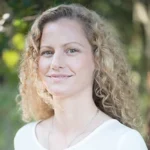
Chelsea Dingman’s first book, Thaw, won the National Poetry Series (UGA Press, 2017). Her second book, through a small ghost, won The Georgia Poetry Prize (UGA Press, 2020). Her third collection is I, Divided (LSU Press, 2023). She is also the author of the chapbook, What Bodies Have I Moved (Madhouse Press, 2018). She is a PhD Candidate at the University of Alberta, and her current work draws on research supported by funding from the Social Sciences and Research Council of Canada. Visit her website: chelseadingman.com.